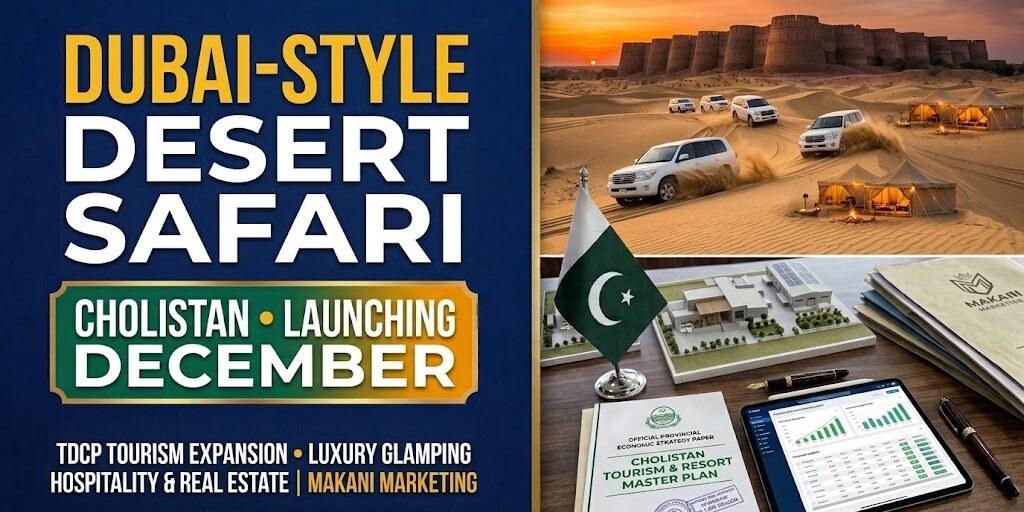
In a major strategic initiative to transform South Punjab into a premier winter adventure and eco-tourism destination, the Government of Punjab, through the Tourism Development Corporation of Punjab (TDCP), has announced the launch of an international-standard, Dubai-style Desert Safari in the Cholistan Desert (Bahawalpur), set to officially debut this December.
Designed to mirror the globally celebrated desert hospitality models of the United Arab Emirates, the project brings structured dune bashing, glamping desert resorts, night cultural arenas, quad-bike racing tracks, and camel safaris to the golden sands surrounding the historic Derawar Fort. Beyond its immediate appeal to domestic holidaymakers and international tourists, the development marks a transformative economic catalyst for Bahawalpur’s hospitality infrastructure, commercial retail, transit connectivity, and regional real estate land values.
                [Cholistan Dubai-Style Desert Safari Ecosystem]
                                       │
        ┌──────────────────────────────┼──────────────────────────────┐
        ▼                              ▼                              ▼
[Adventure & Dune Bashing]      [Glamping & Hospitality]       [Heritage & Culture]
• 4x4 Professional Dune Bashing • Luxury Bedouin-style Pods    • Derawar Fort Illumination
• Certified Off-Road Drivers    • Climate-Controlled Tents     • Sufi Music & Folk Evenings
• Quad Biking & Sandboarding    • Stargazing Night Camps       • Artisanal Craft Bazaars
• Paragliding & Paramotoring    • Fine Dining Desert Pavilions • Traditional Rohi Cuisine
1. The Experience: Bringing Arabian Dune Hospitality to Rohi
For decades, the Cholistan Desert—locally known as Rohi—has gained seasonal international acclaim primarily through the annual TDCP Cholistan Desert Jeep Rally. However, the absence of permanent, organized, high-end hospitality infrastructure meant tourism revenues remained largely transient and seasonal.
The upcoming Dubai-style Desert Safari establishes a sustainable, recurring tourism ecosystem:
- Curated Dune Bashing: Utilizing fleets of specialized 4×4 off-road SUVs managed by certified professional desert drivers, visitors will experience engineered dune-bashing tracks across dynamic desert topographies comparable to Dubai’s Lahbab desert.
- Luxury Desert Camps & Eco-Glamping: Moving beyond basic camping gear, the initiative introduces climate-controlled, luxury glamping pods and premium Bedouin-style desert camps equipped with modern ensuite amenities, private viewing decks, and luxury concierge services.
- Heritage & Nighttime Illumination: Situated against the backdrop of the 9th-century Derawar Fort with its 40 towering bastions, the desert resort zone will feature dynamic architectural facade lighting, live Sufi musical evenings, traditional Jhumar folk performances, and astronomical stargazing setups.
- Integrated Adventure Sports: The operational framework incorporates designated arenas for sandboarding, desert dirt bikes, quad-ATV tours, hot air ballooning excursions, and traditional camel caravans.
                 [Economic Ripple Effect: Tourism to Real Estate]
                                        │
                                        ▼
             [TDCP Desert Safari & Glamping Infrastructure Launch]
                                        │
                                        ▼
             [Surge in High-Net-Worth Winter Tourism & Foreign Inflows]
                                        │
        ┌───────────────────────────────┴───────────────────────────────┐
        ▼                                                               ▼
[Urban Real Estate & Hospitality]                             [Periphery & Highway Commercials]
• Demand for 3-star & 5-star hotels in Bahawalpur             • Land appreciation along Ahmedpur East & Yazman
• Growth of short-stay serviced apartments & rentals          • Commercial waypoints, fuel hubs & food plazas
• Expansion of brand retail & traditional handicraft bazaars  • Resort farming, eco-villas & private agro-plots
• Airport modernization & expanded commercial flight schedules• M-5 Motorway corridor economic activation
2. The Real Estate Multiplier: Bahawalpur’s Emerging Hospitality Corridor
From an investment and asset management perspective, large-scale civic tourism initiatives fundamentally reshape regional land economics. The launch of the Cholistan Desert Safari creates a direct economic multiplier across three primary property segments:
- Hospitality Asset Expansion in Bahawalpur City: The city of the Nawabs—rich with architectural landmarks like Noor Mahal, Darbar Mahal, and Gulzar Mahal—faces an acute shortage of branded, international-standard hotel rooms during the peak winter season (November to March). The anticipated influx of safari tourists will drive institutional demand for boutique heritage hotels, 4-star business lodgings, and managed serviced apartments, offering attractive rental yields for hospitality investors.
- Commercial Land Appreciation Along Access Arteries: The transit corridors linking Bahawalpur City to Derawar Fort, Ahmedpur East, and Yazman are positioned for commercial value growth. Prime road-facing acreage along these arteries is attracting private developers aiming to construct tourist motels, highway waypoints, fueling complexes, and family entertainment plazas.
- The Eco-Resort and Farmhouse Sector: Echoing trends seen in the outskirts of major urban centers, high-net-worth investors and overseas Pakistanis from the Multan and Bahawalpur divisions are acquiring agricultural and semi-desert land banks to construct private eco-resorts, desert retreat villas, and rental farmhouses to capitalize on weekend tourism demand.
3. Strategic Infrastructure & Accessibility Upgrades
A foundational component ensuring the long-term commercial viability of the Cholistan tourism project is South Punjab’s modern transit network:
- The M-5 Motorway Axis: The Sukkur-Multan Motorway (M-5) connects the Bahawalpur division directly with central Punjab and Sindh, reducing road transit times from Lahore, Faisalabad, and Multan into smooth, multi-lane highway journeys.
- Aviation Linkages: Bahawalpur Airport and the nearby Multan International Airport provide immediate air bridges for overseas Pakistanis and international visitors arriving from Gulf hubs like Dubai, Abu Dhabi, and Doha.
- Public-Private Partnership (PPP) Investment Models: The Punjab Government is actively engaging private hospitality conglomerates, tour operators, and vehicle leasing firms through concessionary models, ensuring that infrastructure maintenance, vehicle standards, and guest safety adhere to global hospitality benchmarks.
4. Macroeconomic & Investment Outlook
The introduction of a structured, Dubai-style desert safari in Cholistan reflects a broader economic pivot toward monetizing Pakistan’s diverse geography and cultural heritage. By generating direct local employment for camel herders, culinary artisans, tourist guides, and hospitality staff, the project fosters inclusive economic growth across South Punjab.
For commercial real estate developers, hotel operators, and corporate investors, the message is clear: Bahawalpur is transitioning from a regional historical center into an active, year-round commercial and tourism destination. Positioning capital early in verified hospitality projects, commercial frontage land, and managed accommodation networks represents an exceptional avenue for long-term capital appreciation and recurring commercial yields.
At Makani Marketing, our commercial real estate and project marketing intelligence desk closely monitors emerging property trends, helping corporate investors, hospitality developers, and overseas clients secure high-growth land assets and premium commercial opportunities across Pakistan’s fastest-growing corridors