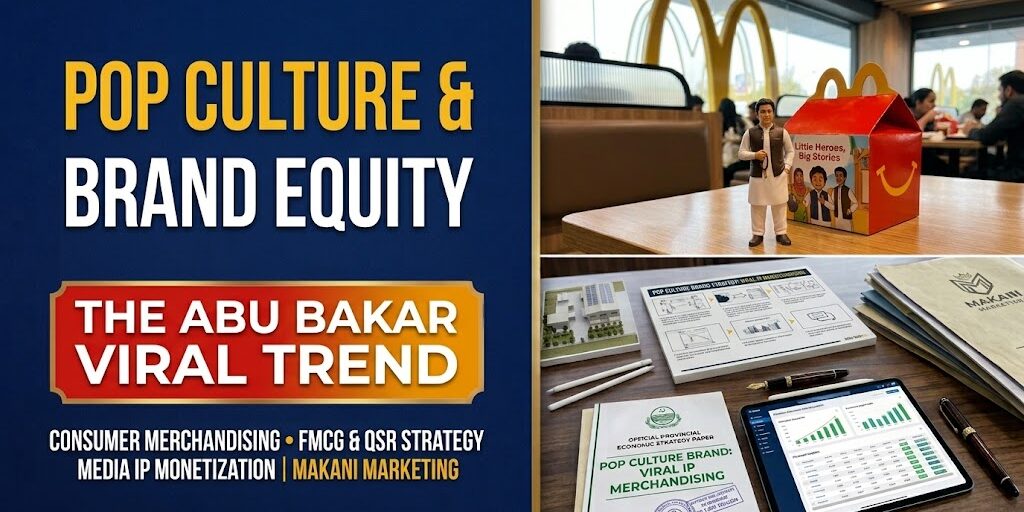
In an unprecedented demonstration of digital fandom transforming into organic brand equity, Pakistani social media has ignited a playful yet commercially significant marketing campaign: demanding that multinational quick-service restaurant (QSR) giant McDonald’s Pakistan officially launch a collectible “Abu Bakar” Happy Meal toy.
Inspired by the character Abu Bakar—portrayed by actor Sheheryar Munawar in ARY Digital’s blockbuster television drama Dar-e-Nijaat alongside Dur-e-Fishan Saleem—the phenomenon has evolved from lighthearted episodic commentary into a viral case study on modern pop-culture marketing, consumer engagement, and the commercial power of local media intellectual property (IP).
What began on platforms like Instagram, X (formerly Twitter), and TikTok as relatable memes dissecting the character’s emotional calm and green-flag romantic trope has rapidly crossed over into corporate marketing discourse. Netizens have produced concept digital renders, mock packaging designs, and stylized bobblehead mockups showing the fictional character nestled inside McDonald’s signature red-and-yellow cardboard boxes.
Beyond the immediate humor, this public clamor highlights a profound shift in consumer psychology: South Asian television narratives now command the cultural resonance and emotional loyalty required to drive retail footfall, Fast-Moving Consumer Goods (FMCG) collaborations, and commercial brand activations.
                 [The Viral Conversion: Television IP to Commercial Retail]
                                             │
        ┌────────────────────────────────────┼────────────────────────────────────┐
        ▼                                    ▼                                    ▼
[The Cultural Spark]                  [The Digital Amplification]          [The Commercial Opportunity]
• Character: Abu Bakar (Dar-e-Nijaat) • Grassroots memes & viral trends    • Demand for collectible merch
• Nuanced emotional appeal            • Mockup Happy Meal toy renders      • Massive adult & Gen-Z QSR draw
• High ratings across South Asia      • Organic tagging of brand accounts  • Monetizing local media IP
• Intense cross-border fandom         • Consumer-led product advocacy      • Driving physical retail footfall
1. The Fandom Phenomenon: Why “Abu Bakar” Captured Public Imagination
Pakistani television dramas have historically driven prime-time viewership, but the digital distribution era has amplified their reach across the Middle East, North America, the UK, and India. In Dar-e-Nijaat, the character of Abu Bakar emerged as an emotional anchor amidst complex family tensions.
Viewers responded to the character’s steady disposition, protective maturity, and moral grounding—qualities that stood out against conventional television tropes. As episodes aired, audience engagement transitioned from passive viewing to active participation:
- The “Green-Flag” Standard: Viewers across social channels framed Abu Bakar as the benchmark for a modern relationship partner, turning dialogue snippets and micro-expressions into universally shared digital reaction clips.
- The Humor of Commodification: In digital fan culture, the ultimate sign of endearment is turning an icon into a collectible toy or plushie. Netizens playfully insisted that McDonald’s package Abu Bakar as a physical pocket figurine—a whimsical suggestion that struck a deep chord with hundreds of thousands of engaged followers.
2. The FMCG & QSR Playbook: The Untapped Power of Localized Brand Synergies
In mature retail markets such as Japan, the United States, and South Korea, fast-food giants routinely monetize domestic entertainment properties. McDonald’s global marketing relies heavily on cross-promotions—partnering with anime franchises like Jujutsu Kaisen in East Asia, collaborating with international hip-hop artists on custom meals (such as the Travis Scott and BTS Meals), or creating nostalgic adult Happy Meal lines with lifestyle labels like Cactus Plant Flea Market.
However, in Pakistan and broader South Asia, international QSR franchises frequently rely on standardized global licensing deals—distributing Hollywood animated movie figures, Disney promotions, or international video game tie-ins that often disconnect from domestic cultural conversations.
                 [Strategic Shift: Global Syndication vs. Hyper-Local IP]
                                             │
        ┌────────────────────────────────────┴────────────────────────────────────┐
        ▼                                                                         ▼
[Standard Global QSR Syndication]                             [Hyper-Local Cultural Integration]
• Licensed Hollywood animated films                           • Domestic television drama characters (e.g., Abu Bakar)
• Global gaming / video game tie-ins                          • Local pop-culture icons & regional celebrities
• Broad demographic targeting (primarily children)           • Captures high-spending Adult, Gen-Z, & Millennial tiers
• Passive consumer reception                                  • High organic virality & grassroots social advocacy
• Zero domestic narrative friction                            • Deep emotional resonance driving real-world foot traffic
- Capturing the “Kidult” Market: The demand for an Abu Bakar Happy Meal toy is not driven by children; it is championed by Gen-Z, young working professionals, and millennial audiences. This demographic represents the core of the global “kidult” trend—adult consumers who purchase toys, collectibles, and novelty merchandise for nostalgia, decor, and social media display.
- Organic Customer Acquisition Cost (CAC): When consumers publicly demand a product before it exists, the brand’s customer acquisition costs drop to zero. An official, limited-edition run of collectible figures inspired by a trending domestic television phenomenon would guarantee immediate sell-outs and earned media coverage worth millions of rupees in advertising value.
3. Real Estate and Commercial Retail Footfall Implications
From an asset management and retail property perspective, cultural pop-up collaborations are prime drivers of physical commercial real estate performance:
- Revitalizing Mall Footfall & Drive-Thrus: Quick-service restaurants anchor commercial high streets, retail food courts, and standalone drive-thru plots along prime metropolitan arteries (such as Islamabad’s Blue Area, Lahore’s Gulberg and DHA corridors, and Karachi’s Clifton). High-impact collectible drops create queue culture, boosting auxiliary footfall for neighboring retail shops and entertainment venues.
- Commercial Merchandising Real Estate: The rapid surge of interest in domestic television merchandise points toward an expanding retail category. Malls and commercial developments that integrate dedicated lifestyle pop-up spaces, character-driven merchandise kiosks, and entertainment retail hubs can capture lease premiums from brands seeking physical consumer touchpoints beyond digital screens.
- Experience-Led Retail Economics: Modern consumers do not visit shopping plazas solely for basic transactions; they seek experiential engagement. Bringing viral pop culture into physical retail environments bridges the gap between digital streaming platforms and brick-and-mortar commercial spaces.
                 [The Retail Footfall & Commercial Multiplier Cycle]
                                         │
                                         ▼
            [Media House Produces Culturally Resonant Television IP]
                                         │
                                         ▼
            [Grassroots Digital Fandom Demands Tangible Merchandise]
                                         │
                                         ▼
            [Retail / QSR Giant Executes Limited-Edition Collaboration]
                                         │
        ┌────────────────────────────────┴────────────────────────────────┐
        ▼                                                                 ▼
[High-Street & Mall Footfall Surge]                             [Direct Commercial Monetization]
• Long consumer queues at flagship branches                     • High-margin collectible sales
• Spillover traffic to adjacent retail stores                    • Spikes in average transaction values
• Increased leasing demand for prime food courts                • Lucrative licensing revenues for studios
• Enhanced commercial real estate rental yields                 • Sustained multi-channel brand equity
4. The Broader Corporate Lesson for Pakistani Brands
The viral demand for an “Abu Bakar Happy Meal” is far more than an ephemeral internet joke. It is an urgent signal to corporate marketing directors, media conglomerates, and commercial property developers across Pakistan: the bridge between television storytelling and consumer product merchandising remains virtually unbuilt.
Television networks produce content that garners billions of cumulative digital views across YouTube and broadcast television, yet revenue models remain largely confined to traditional 30-second on-screen commercials and corporate product placements. By institutionalizing formal character merchandising, IP licensing partnerships, and cross-category retail collaborations, media studios and consumer brands can unlock multi-billion-rupee revenue streams.
At Makani Marketing, our corporate brand advisory and commercial real estate research desk studies how pop-culture movements, consumer trends, and digital virality shape retail footfall, high-street tenant demand, and corporate asset value across Pakistan’s fastest-growing commercial hubs.