
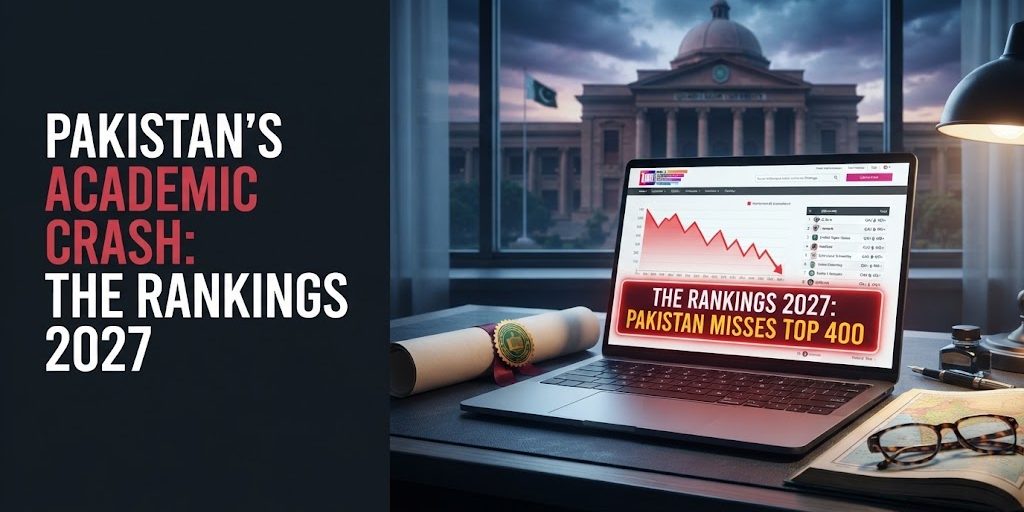
Pakistan Misses Top 400 as No University Makes the World University Rankings 2027 🇵🇰📉🏛️📊
In a concerning assessment of national academic research and higher education infrastructure, the Times Higher Education (THE) World University Rankings 2027 revealed that not a single Pakistani university managed to break into the global top 400 tier.
While 56 Pakistani higher education institutions were evaluated and placed on the global roster, the country’s top-performing institution—Quaid-i-Azam University (QAU) in Islamabad—slipped into the 551–600 band, followed by the National University of Sciences and Technology (NUST) in the 601–650 bracket.
The outcome highlights a growing performance gap when contrasted with regional peers. Notably, Malaysia’s University of Malaya broke into the global top 200 for the first time (joint 194th), while regional institutions in India, including the Indian Institute of Science (IISc Bengaluru at 254th), maintained firm footprints within the upper echelons.
Here is an analysis of the rankings data, national performance bands, core structural shortfalls, and the reforms needed to revive academic competitiveness.
Where Pakistani Universities Stand in THE 2027 Rankings
Across the 56 evaluated institutions, Pakistani universities were distributed primarily within mid-tier and lower-tier global bands:
               PAKISTAN VARSITIES: THE 2027 PERFORMANCE BANDS
 ┌─────────────────────────────────────────────────────────────┐
 │ TOP 400 TIER: 0 UNIVERSITIES                                │
 │ • Complete absence from the world's premier academic tier.  │
 ├─────────────────────────────────────────────────────────────┤
 │ 551 – 600 BAND: NATIONAL LEADER                             │
 │ • Quaid-i-Azam University (QAU), Islamabad                  │
 ├─────────────────────────────────────────────────────────────┤
 │ 601 – 650 BAND                                              │
 │ • National University of Sciences and Technology (NUST)     │
 ├─────────────────────────────────────────────────────────────┤
 │ 651 – 700 BAND                                              │
 │ • COMSATS University Islamabad (CUI)                        │
 ├─────────────────────────────────────────────────────────────┤
 │ 701 – 800 BAND                                              │
 │ • Bahauddin Zakariya University (BZU), Multan               │
 │ • University of Agriculture, Faisalabad (UAF)               │
 │ • University of Lahore (UOL)                                │
 ├─────────────────────────────────────────────────────────────┤
 │ 801 – 1,000+ BAND                                           │
 │ • Abdul Wali Khan University, Air University, GIK Institute,│
 │   GCU Lahore, GCU Faisalabad, IIUI, Iqra University, etc.   │
 └─────────────────────────────────────────────────────────────┘
Comparative Regional Benchmark: The Widening Gap
The disparity becomes pronounced when contrasting Pakistan’s trajectory against emerging higher education ecosystems across Asia:
| Institution / Country | THE World Rank 2027 | Key Academic Differentiator |
| University of Malaya (Malaysia) | Joint 194th (Top 200) | High international faculty ratio, heavy semiconductor/biotech research grants, aggressive global student mobility. |
| IISc Bengaluru (India) | 254th | Dedicated STEM patent production, deep integration with defense/industrial tech clusters. |
| Saveetha SIMTS (India) | 326–350 Band | Specialized medical research output and high international citation indices. |
| Quaid-i-Azam University (Pakistan) | 551–600 Band | High basic research volume hindered by operational budget shortfalls and administrative friction. |
| NUST Islamabad (Pakistan) | 601–650 Band | Strong local engineering pedigree constrained by lower international faculty percentages and industry co-patenting. |
Core Catalysts Behind the Decline
Academic analysts, vice-chancellors, and policy researchers point to four structural factors contributing to the lag:
            CORE DRIVERS OF THE RANKING DECLINE
 ┌─────────────────────────────────────────────────────────────┐
 │ 1. HIGHER EDUCATION BUDGET CONTRACTION                      │
 │ • Recurring cuts to Higher Education Commission (HEC)       │
 │   recurring and development grants; heavy devaluation       │
 │   eroding procurement power for high-end laboratory gear.   │
 ├─────────────────────────────────────────────────────────────┤
 │ 2. LOW CITATION IMPACT & RESEARCH RELEVANCE                 │
 │ • High volume of predatory/low-impact publishing driven by   │
 │   crude quantitative promotion criteria rather than high-   │
 │   impact factor journals (Nature, Science, Lancet).         │
 ├─────────────────────────────────────────────────────────────┤
 │ 3. WEAK INTERNATIONALIZATION METRICS                        │
 │ • Minimal foreign faculty presence and low international    │
 │   student ratios due to visa friction and regional security.│
 ├─────────────────────────────────────────────────────────────┤
 │ 4. INTELLECTUAL CAPITAL DRAIN (BRAIN DRAIN)                 │
 │ • Leading post-doctoral researchers and senior STEM PhD     │
 │   professors relocating to the Middle East, UK, and Europe. │
 └─────────────────────────────────────────────────────────────┘
The Five Pillars Required for Higher Education Reform
To reverse this trajectory in upcoming ranking cycles, education policy bodies and federal authorities must pursue structural interventions:
- Ring-Fenced Competitive Research Grants: Transition funding away from generic institutional overheads toward competitive, peer-reviewed national research funds targeting applied AI, agricultural biotechnology, climate resilience, and renewable energy.
- Qualitative Faculty Evaluation: Overhaul HEC criteria for tenure-track faculty appointments, discarding mere publication counts in favor of global citation impact, patents granted, and industrial tech transfer.
- Modernizing Industry-Academia Linkages: Incentivize domestic industrial houses and tech exporters to co-sponsor university research chairs and corporate incubation hubs.
- Enhancing Campus Internationalization: Facilitate streamlined visa frameworks, exchange scholarships, and research fellowships to attract international scholars and graduate researchers from Central Asia, Africa, and the wider Global South.
- Administrative Governance Autonomy: De-politicize vice-chancellor selection boards and institutional syndicates, ensuring universities operate under professional academic governance.
Strategic Advisory & International Academic Mobility
While domestic higher education institutions work to realign research benchmarks with global standards, Pakistani students and scholars pursuing competitive undergraduate, Master’s, and doctoral pathways abroad require targeted guidance—from credential evaluation and research proposal mapping to securing international scholarships. Prospective scholars can consult Mansory Consultancy.
📌 Data Source Notice: Rankings referenced are compiled from the officially released Times Higher Education (THE) World University Rankings 2027 database, evaluating performance across teaching, research environment, research quality, international outlook, and industry engagement.