
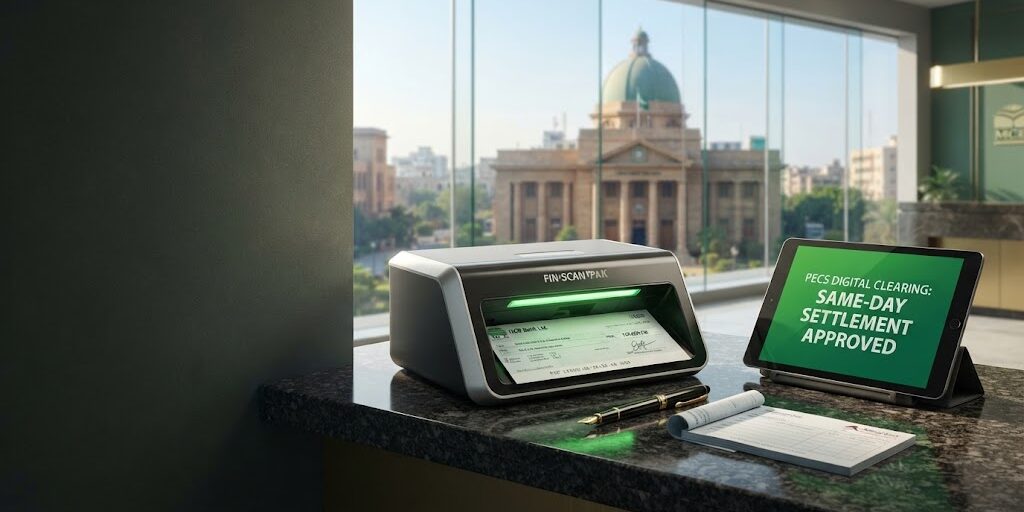
SBP LAUNCHES NEW DIGITAL CHEQUE CLEARING SYSTEM (PECS) STARTING OCTOBER 15 🇵🇰💳🏦⚡🚨
In a major structural upgrade to Pakistan’s financial infrastructure, the State Bank of Pakistan (SBP), in collaboration with the National Institutional Facilitation Technologies (NIFT), has officially notified the launch of the Pakistan Express Clearing System (PECS).
Beginning October 15, 2026, the central bank is replacing the traditional, manual courier transport of paper cheques with electronic, image-based clearing. Under PECS, presenting banks capture high-resolution, secure digital images and Magnetic Ink Character Recognition (MICR) data directly at the branch or regional clearing processing unit and transmit them electronically to NIFT.
The modernization eliminates the multi-day clearing wait that has long affected commercial trade, inter-city business transactions, and retail banking. With a phased pilot running through November and a targeted nationwide completion date of April 30, 2027, PECS marks a key milestone in Pakistan’s shift toward faster payment settlement.
Here is an analysis of how PECS operates, its fraud mitigation safeguards, the phased rollout schedule, and its commercial impact on corporate liquidity.
From Paper Transit to Digital Imagery: The Technical Transformation
Under the legacy clearing architecture, physical paper cheques had to be gathered by branch staff, sorted, and dispatched via courier networks to NIFT clearing hubs before being physically presented to the drawee bank—a logistical process that frequently took two to four business days, especially for inter-city instruments.
            LEGACY VS. PECS DIGITAL CLEARING PIPELINE
 ┌─────────────────────────────────────────────────────────────┐
 │ TRADITIONAL MANUAL PROCESS (T+2 TO T+4)                     │
 │ • Customer deposits physical paper cheque at branch.        │
 │ • Cheques sorted and transported via physical couriers.     │
 │ • NIFT sorts paper batches and dispatches to drawee bank.   │
 │ • Significant transit delays, logistical costs & wear.      │
 └─────────────────────────────────────────────────────────────┘
                                │
                                ▼
 ┌─────────────────────────────────────────────────────────────┐
 │ PAKISTAN EXPRESS CLEARING SYSTEM - PECS (SAME-DAY / T+1)    │
 │ • Branch scans front & back of cheque + captures MICR data. │
 │ • Encrypted digital image transmitted instantly to NIFT.    │
 │ • Drawee bank verifies signature & balance digitally.       │
 │ • Fast electronic settlement executed across accounts.      │
 └─────────────────────────────────────────────────────────────┘
Core Pillars & Operational Advantages of PECS
1. Rapid Settlements & Working Capital Acceleration
By cutting out physical freight transit, corporate treasuries, SMEs, traders, and individual account holders will see their inter-bank funds credited in fractions of the traditional clearing window. This acceleration directly improves cash flow velocity across commercial supply chains.
2. Reduced Inter-City Clearing Friction
Historically, an outstation cheque (e.g., drawn on a Karachi bank but deposited in Islamabad or Lahore) faced prolonged clearing cycles. PECS standardizes electronic clearing protocols regardless of geographic origin, treating local and outstation instruments under a unified digital window.
3. The “Defer for Physical” Security Check
To prevent digital tampering, fraudulent image manipulation, or altered payee details, SBP and NIFT have introduced strict verification safeguards:
- If a paying bank detects discrepancies during electronic scrutiny—such as irregular signature patterns, suspected image alteration, or high-value threshold alerts—it can mark the transaction “Defer for Physical”.
- This status pauses automatic settlement and mandates the physical delivery of the original paper instrument for forensic verification before release of funds, protecting customer accounts against unauthorized debits.
Phased Implementation Schedule
To ensure institutional readiness and mitigate systemic settlement risks, the SBP has mandated a structured rollout across commercial and microfinance banks:
| Implementation Phase | Operational Window | Scope & Deliverables |
| Phase 1: Pilot Launch | October 15 – November 15, 2026 | Initial operational run across select commercial banks and designated metropolitan branches to audit system stability and digital transmission loads. |
| Phase 2: Progressive Expansion | Mid-November 2026 – Q1 2027 | Tier-by-tier rollout across all commercial banks, Islamic banking institutions, and microfinance networks nationwide. |
| Phase 3: Complete Cutover | By April 30, 2027 | 100% nationwide mandatory implementation; physical movement of routine clearing cheques completely truncated. |
Throughout the transition, banks are required to appoint dedicated PECS project leads, report weekly migration metrics to the central bank, and maintain strict customer service standards without disrupting routine counter operations.
Strategic Impact on Real Estate & Corporate Transactions
The deployment of PECS brings specific operational benefits to high-ticket industries like real estate and capital markets:
- Token & Down Payment Velocity: Real estate developers, plot buyers, and institutional funds can clear high-value pay orders, banker’s cheques, and cross-cheques faster, speeding up property transfers and contract executions.
- Reduced Counterparty Risk: Shorter clearing windows lower systemic float exposure, reducing the risk of bounced instruments during land registry and commercial contract signings.
- Auditability & Paperless Records: High-resolution digital archives linked to NIFT provide corporate accounting teams with accessible digital audit trails for historical tax and banking reconciliations.
Corporate Advisory & Commercial Real Estate Structuring
Digital banking upgrades and faster capital settlement mechanisms demand modern corporate financial planning and compliant transactional workflows. Commercial developers, corporate entities, and institutional investors seeking structured project marketing, verified transaction advisory, and market positioning can collaborate with Makani Marketing.
📌 Regulatory Notice: Compiled from the official regulatory circulars issued by the State Bank of Pakistan (SBP) and technical directives from National Institutional Facilitation Technologies (NIFT). Customers with specific clearing inquiries should consult their respective commercial bank branch for local branch enablement dates during the pilot phase.