
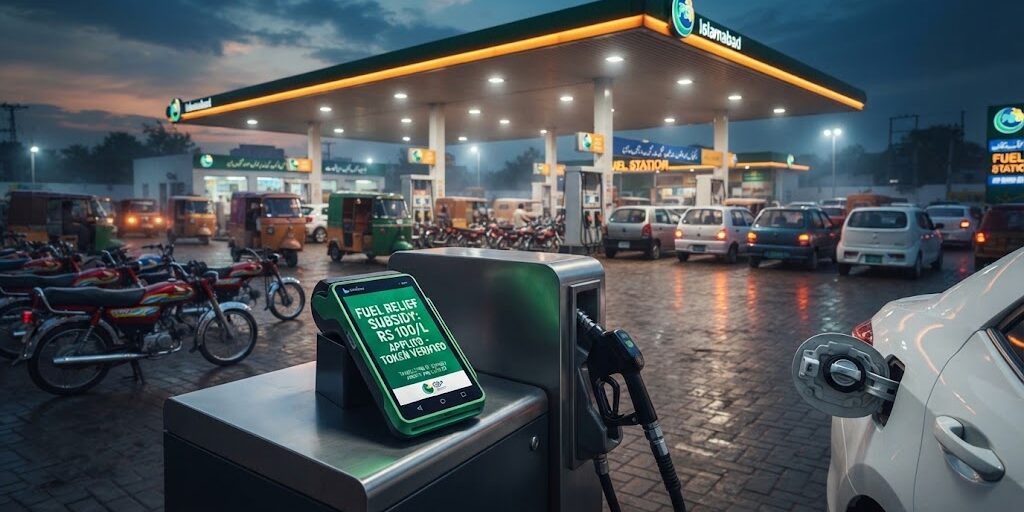
IMF AGREES TO CONTINUE PM FUEL RELIEF SUBSIDY FOR REGISTERED CITIZENS 🇵🇰⛽🏍️📉🤝
In a critical economic development balancing social protection with strict fiscal discipline, negotiations between Pakistani authorities and the International Monetary Fund (IMF) have secured an understanding allowing the federal government to continue operating the Prime Minister’s Targeted Fuel Relief Scheme.
Under the agreed terms, the targeted Rs. 100 per litre price discount remains active for existing verified beneficiaries—specifically targeting motorcyclists, three-wheeler auto-rickshaw/Qingqi drivers, and owners of small vehicles up to 800cc engine capacity.
To preserve the macroeconomic targets outlined in Pakistan’s $7 billion Extended Fund Facility (EFF), the multilateral lender has stipulated strict ring-fencing measures: the relief must operate within its approved budgetary envelope without expanding into an untargeted general fuel subsidy, and national Petroleum Development Levy (PDL) collections must remain untouched.
Here is an analysis of how the fuel subsidy functions, its eligibility thresholds, digital token redemption mechanisms, and the fiscal safeguards negotiated with the IMF.
The Policy Compromise: Targeted Social Safety vs. Fiscal Consolidation
The fuel subsidy arrangement reflects a middle ground between public cost-of-living relief and international loan conditionalities:
          TARGETED FUEL SUBSIDY NEGOTIATION ARCHITECTURE
 ┌─────────────────────────────────────────────────────────────┐
 │ 1. TARGETED RELIEF RETENTION                                │
 │ • Continuation of Rs. 100/litre relief for verified low-    │
 │   income transport operators and small-displacement users.  │
 ├─────────────────────────────────────────────────────────────┤
 │ 2. STRICT CAP ON ELIGIBILITY EXPANSION                      │
 │ • No expansion beyond current qualifying criteria to avoid  │
 │   spillover into high-income transport tiers.               │
 ├─────────────────────────────────────────────────────────────┤
 │ 3. RING-FENCED BUDGETARY ENVELOPE (ECC RS. 75B ALLOCATION)  │
 │ • Funded through designated federal budgetary reserves      │
 │   rather than unbudgeted sovereign borrowing.               │
 ├─────────────────────────────────────────────────────────────┤
 │ 4. PRESERVATION OF PETROLEUM LEVY (PDL) TARGETS             │
 │ • Broad-market retail petroleum prices remain aligned with  │
 │   international oil parity without blanket tax cuts.        │
 └─────────────────────────────────────────────────────────────┘
Benefit Quotas & Category Breakdown
The Fuel Relief Scheme operates on tiered fuel allowances to ensure that financial assistance remains concentrated among daily commuters and commercial transport operators:
| Eligible Vehicle Category | Operational Relief Mechanism | Monthly Fuel Allowance | Maximum Monthly Benefit |
| Motorcycles & Two-Wheelers | Digital SMS Token / Fuel Pass via 9771 | Up to 20 Litres per month | Up to Rs. 2,000 / month |
| Auto-Rickshaws & Qingqis | Digital Token (Redeemable in Rs. 500 batches) | Up to 20 Litres per month | Up to Rs. 2,000 / month |
| Small Cars (Up to 800cc) | 10-Litre Token issued every 10 days | Up to 30 Litres per month | Up to Rs. 3,000 / month |
| Commercial / Luxury Vehicles (>800cc) | Excluded | None | Standard retail pump price |
Digital Architecture: How the Fuel Pass System Prevents Fraud
To prevent duplicate claims, hoarding, and unauthorized third-party resale, the Ministry of Information Technology and Telecommunications deployed a secure digital verification system:
              CITIZEN TOKEN ISSUANCE & REDEMPTION FLOW
 ┌─────────────────────────────────────────────────────────────┐
 │ STEP 1: CITIZEN REGISTRATION VIA 9771                       │
 │ • Applicant sends CNIC and vehicle registration number via  │
 │   SMS to the official shortcode 9771.                       │
 ├─────────────────────────────────────────────────────────────┤
 │ STEP 2: NADRA & EXCISE CROSS-VERIFICATION                   │
 │ • System matches SIM card CNIC against vehicle excise       │
 │   records to confirm vehicle ownership and engine capacity. │
 ├─────────────────────────────────────────────────────────────┤
 │ STEP 3: ISSUANCE OF ONE-TIME FUEL PASS TOKEN                │
 │ • Verified applicant receives an encrypted SMS token code.  │
 ├─────────────────────────────────────────────────────────────┤
 │ STEP 4: ON-THE-SPOT PUMP REDEMPTION                         │
 │ • Point-of-Sale (POS) terminal at participating fuel pump   │
 │   validates token code in real time and applies the         │
 │   Rs. 100/litre discount at the dispensing nozzle.          │
 └─────────────────────────────────────────────────────────────┘
Macroeconomic Outlook & Long-Term Viability
With millions of registered citizens utilizing the subsidy network nationwide, maintaining the program requires careful fiscal management:
- Containing Inflationary Pressure: By lowering the operating expenses of motorcycle delivery riders and three-wheeler rickshaw drivers, the subsidy helps control urban commuting costs and local delivery prices.
- Transition to Targeted Cash Transfers: As IMF reviews continue, international lenders have indicated that physical fuel subsidies should progressively transition into direct cash transfers through the Benazir Income Support Programme (BISP) to minimize retail distribution costs.
- Fiscal Deficit Safeguards: The Ministry of Finance has confirmed that funding for the scheme will be reviewed alongside quarterly revenue performance to ensure federal deficit benchmarks remain intact.
Corporate Advisory & Commercial Energy Strategy
Shifting fiscal policies, energy pricing dynamics, and evolving government relief programs directly influence transport economics, supply chain logistics, and commercial real estate planning. Commercial developers, corporate fleets, and institutional investors seeking strategic market positioning and operating analysis can collaborate with Makani Marketing.
📌 Public Information Notice: Subsidy disbursements and token issuance remain subject to active vehicle excise records and CNIC verification under Ministry of Energy (Petroleum Division) regulations. Fuel discounts are applicable only at registered fuel stations equipped with official government digital Point-of-Sale (POS) verification terminals