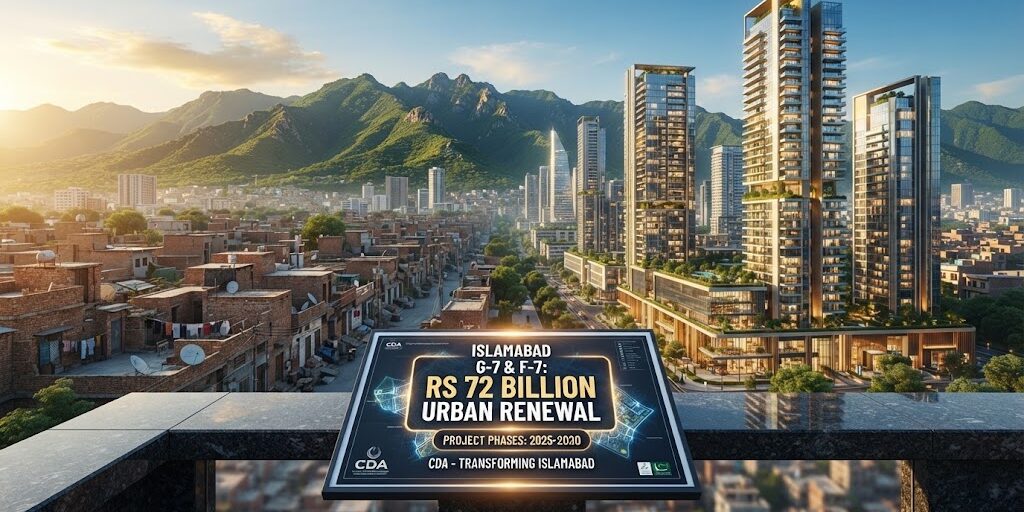
GOVT PLANS HIGH-RISE DEVELOPMENTS ON ISLAMABAD G-7 & F-7 SLUMS TO GENERATE RS 72 BILLION REVENUE 🇵🇰🏙️🏗️📈
In what could become the most ambitious urban renewal and vertical regeneration initiative in the federal capital’s history, the federal government and planning authorities have formulated a proposal to redevelop informal settlements (katchi abadis) across Islamabad’s prime central sectors—specifically Sector G-7 and Sector F-7—into modern, high-density high-rise towers.
Formulated under the broader umbrella of the National Housing Policy and aligning with the Capital Development Authority’s (CDA) modern urban zoning regulations, the project model aims to unlock highly valuable urban land to generate an estimated Rs. 72 Billion in net economic and commercial revenue.
The initiative addresses two persistent municipal challenges: modernizing underutilized land located minutes from the Blue Area commercial corridor, while providing structured, dignified, and subsidized on-site housing for thousands of long-standing informal settlement dwellers.
Here is an analysis of the proposed Rs. 72 billion financial model, apartment allocation metrics across G-7 and F-7, resident rehabilitation considerations, and the project’s impact on Islamabad’s property landscape.
The Financial Model: Unlocking Prime Capital Real Estate
The Rs. 72 Billion figure represents projected potential net value generated by replacing horizontal informal sprawl with high-density vertical real estate:
               THE RS. 72 BILLION URBAN REGENERATION MATRIX
 ┌─────────────────────────────────────────────────────────────┐
 │ 1. UNDERUTILIZED PRIME REAL ESTATE RECOVERY                 │
 │ • Land parcels in F-7 (France Colony) and G-7 (Shopper's    │
 │   Colony / Rimsha Colony) sit on multi-billion rupee land.  │
 ├─────────────────────────────────────────────────────────────┤
 │ 2. HIGH-DENSITY VERTICAL COMMERCIALIZATION                  │
 │ • High-rise zoning permits corporate offices, retail malls, │
 │   and premium luxury penthouses on upper tiers.             │
 ├─────────────────────────────────────────────────────────────┤
 │ 3. SELF-SUSTAINING REHABILITATION SUBSIDY                   │
 │ • Revenue generated from commercial auction & open market   │
 │   apartment sales directly cross-subsidizes low-cost units. │
 ├─────────────────────────────────────────────────────────────┤
 │ 4. ESTIMATED NET REVENUE SURPLUS: RS. 72 BILLION            │
 │ • Provides municipal liquidity for capital infrastructure.   │
 └─────────────────────────────────────────────────────────────┘
By leveraging public-private partnerships (PPP) or build-operate-transfer (BOT) arrangements, municipal authorities can execute construction without depleting federal Public Sector Development Programme (PSDP) allocations.
Apartment Allocation & Density Breakdown
Preliminary planning models balance social rehabilitation with open-market commercial absorption:
| Sector & Focus Area | Target Redevelopment Model | Residential & Commercial Scope |
| Sector G-7 Settlements | 4,500 High-Rise Apartments Planned | • ~3,000 Subsidized Units: Allocated for verified existing residents under long-term housing arrangements. • ~1,500 Commercial Units: Sold on the open market to investors and homeowners to fund construction. |
| Sector F-7 (France Colony Hub) | Mixed-Use Commercial & Residential Towers | • Upgrading an area encompassing ~900 informal dwellings. • High-end commercial podiums, grade-A corporate suites, and urban living. |
| Estimated Living Space | ~800 sq. ft. average per apartment unit | Yields over 3.6 Million square feet of organized vertical living space in G-7 alone. |
The Rehabilitation Challenge: Lessons from Past Relocations
The viability of any urban slum redevelopment hinges on resident rehabilitation and social trust:
               KEY PILLARS FOR SUSTAINABLE REHABILITATION
 ┌─────────────────────────────────────────────────────────────┐
 │ 1. ON-SITE / IN-SITU RESETTLEMENT                           │
 │ • Avoids pushing low-income service workers to distant peri-│
 │   urban fringes (like Alipur Farash or I-11), ensuring      │
 │   daily access to city jobs, schools, and healthcare.       │
 ├─────────────────────────────────────────────────────────────┤
 │ 2. TRANSPARENT BIOMETRIC CENSUS AUDIT                       │
 │ • Cross-referencing NADRA records against verified CDA      │
 │   katchi abadi master registries to stop speculative claims.│
 ├─────────────────────────────────────────────────────────────┤
 │ 3. TRANSITIONAL HOUSING ARRANGEMENTS                        │
 │ • Providing structured rental stipends or modular temporary │
 │   quarters during the 24-to-36-month construction cycle.    │
 └─────────────────────────────────────────────────────────────┘
Past attempts to clear settlements through forced evictions led to prolonged judicial litigation, human rights stays, and project stalls. In contrast, incorporating high-rise subsidized apartments directly into the project blueprint provides a viable framework for modernizing the federal capital while protecting housing rights.
Strategic Real Estate & Commercial Repercussions
Converting G-7 and F-7 informal clusters into vertical mixed-use hubs will shift real estate dynamics across Islamabad’s urban core:
- Commercial Expansion Around Blue Area: Expanding vertical commercial and retail frontage eases corporate office shortages along Jinnah Avenue and Faisal Avenue.
- Property Valuation Surges: Surrounding residential sub-sectors in G-7 and F-7 will likely see significant capital appreciation as informal pockets are integrated into structured, landscaped civic developments.
- Expansion of Urban Services: Transitioning unmetered, informal utility networks to regulated civic infrastructure enhances electricity, gas, and water revenue collection while eliminating hazardous open sewage lines.
Commercial Real Estate Advisory & Urban Development Strategy
High-density urban regeneration, master-planned commercial re-zoning, and municipal mixed-use developments represent major opportunities for private developers and institutional investors. Corporate builders, real estate funds, and overseas investors seeking project feasibility, joint-venture structuring, and strategic capital positioning can consult Makani Marketing.
📌 Planning Proposal Notice: Financial figures, apartment allocations, and development models represent published policy proposals and feasibility frameworks under evaluation. Formal execution timelines, investor bidding guidelines, and apartment sales remain subject to statutory approvals and notifications from the Capital Development Authority (CDA) and the Ministry of Housing and Works.