
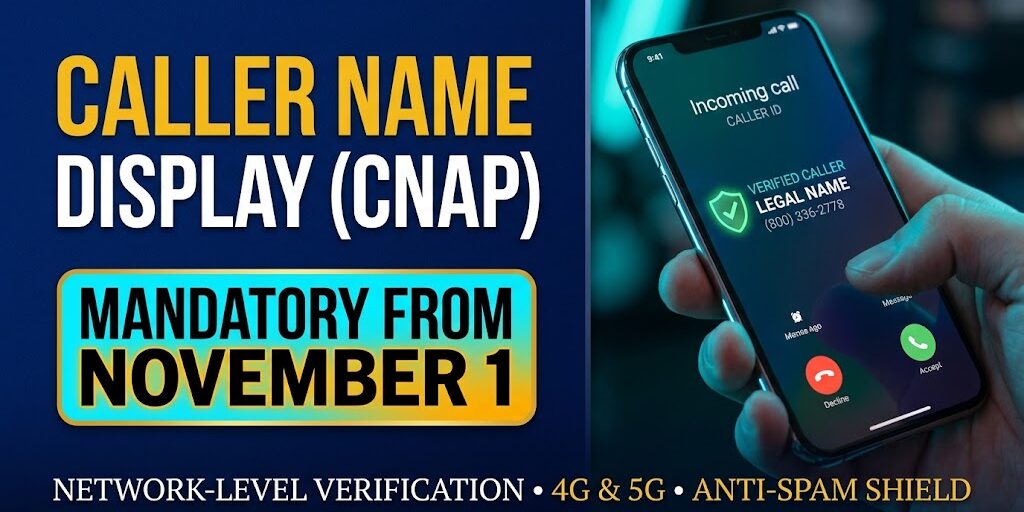
In an important regulatory milestone for telecommunications and digital consumer defense, telecom authorities have issued binding directives mandating the nationwide implementation of the Calling Name Presentation (CNAP) supplementary service starting November 1, 2026.
For years, mobile users have relied on crowdsourced third-party caller ID applications to identify unfamiliar numbers. While convenient, crowdsourced apps come with significant privacy tradeoffs—including contact book syncing, user data harvesting, and unverified or altered contact labels.
Under the new CNAP framework, caller identification moves directly into the core telecommunications infrastructure. When an incoming call connects over 4G (VoLTE) and 5G networks, the recipient’s handset will automatically fetch and display the caller’s legally registered subscriber name directly from the originating telecom service provider’s database at call set-up time.
CNAP Service Architecture at a Glance
| Implementation Metric | Statutory Directive Specification |
| Mandatory Go-Live Date | November 1, 2026 |
| Core Telecom Technology | Calling Name Presentation (CNAP) |
| Network Coverage | 4G (VoLTE) & 5G Networks (2G, 3G & landline examined separately) |
| Identity Source | Verified Customer Acquisition / SIM registration records |
| User Requirement | Zero downloads/apps needed (operates natively over the cellular network) |
| International Inbound Calls | Displayed with the standardized label “International Call” |
| Data Retention Rule | Caller name query cache purged immediately after call completion |
| Primary Objective | Eliminating impersonation fraud, phishing vectors, and unsolicited spam |
1. How the CNAP System Operates in Real Time
Unlike third-party mobile applications that scan internal phone storage or rely on community-edited address books, CNAP operates as an authenticated signaling layer protocol handled by telecom operators:
[Caller Dials Recipient Number over 4G/5G]
                     │
                     ▼
[Originating Telecom Network Fetches Name from Official Subscriber Database]
                     │
                     ▼
[Encrypted CNAP Signaling Data Transmitted during Call Set-Up Phase]
                     │
                     ▼
[Recipient Screen Displays: Number + Official Registered Legal Name]
                     │
                     ▼
[Call Terminated ➔ System Automatically Purges Identity Cache from Session]
Display Hierarchy Rules
- Saved Contacts Take Precedence: If the incoming number is already saved in your device’s personal contact list, the custom name stored on your phone appears.
- Unsaved Domestic Numbers: If the number is not saved, the caller’s verified legal name—as recorded in their national SIM registration dossier—is presented on screen alongside the phone number.
- International Calls: Unsaved calls originating from foreign telephone switches will display the indicator “International Call” to prevent spoofed cross-border impersonation scams.
2. Curbing Cyber Scams, Impersonation & Financial Fraud
The primary driver behind mandating CNAP at the carrier level is closing vulnerabilities exploited by digital fraudsters, social engineers, and unauthorized telemarketers.
- Elimination of “Digital Arrest” & Agency Impersonation: Scammers frequently call victims claiming to represent law enforcement agencies, tax authorities, courier services, or commercial banks. With CNAP, the phone screen immediately exposes the individual or private connection behind the spoofed authority claim.
- Accountability for Bulk Telemarketers: Unregistered telemarketers who purchase consumer SIM bundles to bypass Do-Not-Disturb (DND) registries will no longer be anonymous; their registered operational or entity names will appear automatically on the call screen.
- No App Exploitation or Permission Leaks: Mobile users are no longer forced to grant third-party caller ID software broad access to their photos, microphones, contacts, or location data just to screen unknown numbers.
3. Business Numbers, Bulk Connections & Privacy Safeguards
The regulatory directives address legitimate enterprise needs and individual privacy protections:
- Registered Business Entities: Commercial enterprises and institutional bulk connection holders can display a verified trade name or trademarked entity name rather than an individual officer’s name, provided the trade credentials pass formal verification with the regulator.
- CLIR Privacy Protection: Subscribers with approved Calling Line Identification Restriction (CLIR)—such as undercover law enforcement, covert intelligence operations, or specialized institutional desks—remain exempt under statutory guidelines.
- Zero Post-Call Data Retention: Telecom service providers are legally prohibited from storing or retaining caller name identity queries after call termination, preventing unauthorized data aggregation or subscriber tracking.
- Grievance Redressal: Telecom operators must establish rapid-resolution desks where subscribers can dispute, correct, or update misspelled name records within designated administrative timeframes.
4. User Advisory: Identity Display Is Not Automatic Immunity
While the CNAP rollout represents a substantial technological advance in call screening, regulatory authorities urge consumers to maintain digital caution:
Security Reminder: The appearance of a registered legal name confirms who holds the underlying SIM subscription; it does not automatically certify that the caller is trustworthy. Never disclose one-time passwords (OTPs), banking credentials, debit/credit card PINs, or sensitive identity numbers over an unsolicited phone call.
Preparing for the November 1 Transition
- For Consumers: You do not need to install updates, download third-party software, or file network requests. Your handset will natively begin receiving CNAP data on 4G and 5G connections starting November 1.
- For Businesses: Ensure all corporate lines, customer support desks, and marketing extensions are registered under your verified legal business title with your enterprise telecom account manager to avoid displaying outdated representative names.