
GOVERNOR’S RULE AND EMERGENCY IMPOSED IN KHYBER PAKHTUNKHWA 🇵🇰🏛️⚖️🚨⚠️
In a decisive political and constitutional escalation, the federal government has officially imposed Governor’s rule and a provincial state of emergency in Khyber Pakhtunkhwa (KP).
The formal proclamations were signed by President Asif Ali Zardari acting on the advice of Prime Minister Shehbaz Sharif and following an emergency session of the federal cabinet.
Invoking Articles 232 (Proclamation of Emergency) and 234 (Power to issue Proclamation in case of failure of Constitutional machinery) of the Constitution of the Islamic Republic of Pakistan, the Centre cited a sharply deteriorating security environment and disagreements over provincial counter-terrorism cooperation.
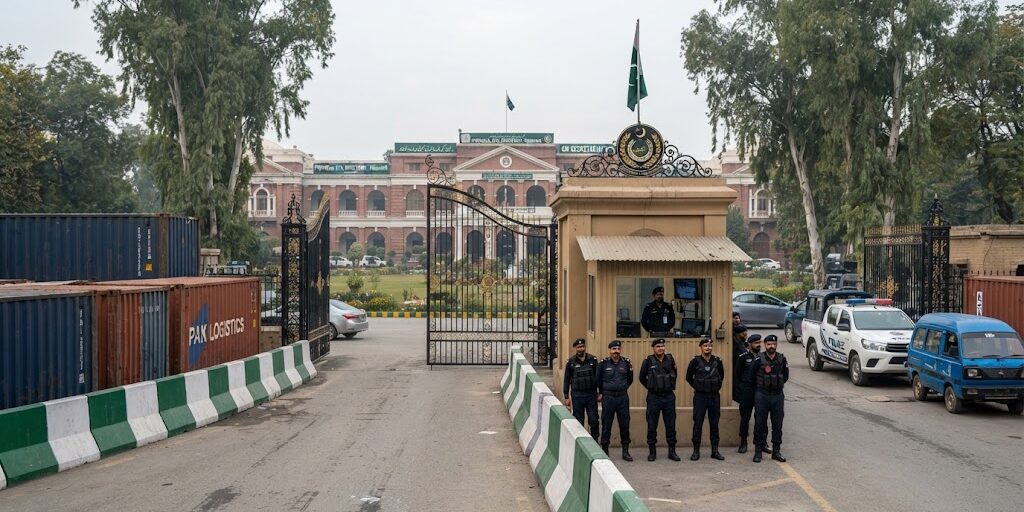
On the ground in Peshawar, law enforcement and provincial security forces moved quickly to secure sensitive administrative sectors. Freight containers have been positioned across primary intersections, the Grand Trunk (GT) Road access corridors, and the vicinity of the Provincial Assembly and Governor House, with heavy police and paramilitary contingents deployed to preserve public order.
Here is an analysis of the constitutional mechanism, the ground security situation in Peshawar, the legal implications for provincial governance, and what comes next.
The Constitutional Framework: Articles 232 and 234
The invocation of emergency powers alters the balance of provincial autonomy and executive decision-making:
          CONSTITUTIONAL EMERGENCY & GOVERNOR'S RULE
 ┌─────────────────────────────────────────────────────────────┐
 │ 📜 ARTICLE 232: PROCLAMATION OF EMERGENCY                   │
 │ • Triggered when internal disturbances or security threats  │
 │   exceed the executive capacity of the provincial setup.    │
 │ • Empowers Parliament to legislate on provincial matters    │
 │   and permits federal directives to provincial departments. │
 ├─────────────────────────────────────────────────────────────┤
 │ ⚖️ ARTICLE 234: FAILURE OF CONSTITUTIONAL MACHINERY         │
 │ • Enables the President to assume or direct the Governor    │
 │   to assume all or any functions of the provincial govt.    │
 │ • Suspends the powers of the provincial cabinet and chief   │
 │   executive during the enforcement window.                  │
 ├─────────────────────────────────────────────────────────────┤
 │ 🏛️ ARTICLE 245: TROOP DEPLOYMENTS                           │
 │ • Armed forces authorized to act in aid of civil power to   │
 │   guard public infrastructure, lines of communication, and  │
 │   key government installations across the province.         │
 └─────────────────────────────────────────────────────────────┘
Under constitutional convention, an emergency proclamation remains valid for up to two months unless extended through a resolution passed by a joint sitting of Parliament.
Key Administrative & Legal Metrics
| Dimension | Constitutional / Operational Status |
| Enforcing Authority | President of Pakistan on advice of the Federal Cabinet |
| Constitutional Articles | Articles 232 & 234 (Emergency & Governor’s Rule) |
| Assistance to Civil Power | Mobilization under Article 245 for key infrastructure security |
| Administrative Helm | Executive powers vested in the Governor of Khyber Pakhtunkhwa |
| Provincial Cabinet Status | Executive powers of the Chief Minister and Cabinet placed in abeyance |
| Parliamentary Window | Requires parliamentary approval for extensions beyond initial statutory windows |
On-Ground Security Posture & Commuter Advisory in Peshawar
To prevent public disorder and maintain critical communications channels, the district administration in Peshawar has instituted several security safeguards:
            PESHAWAR SECURITY & TRAFFIC DIRECTIVES
 ┌─────────────────────────────────────────────────────────────┐
 │ 🚧 CONTAINER CHECKPOINTS & ACCESS RESTRICTIONS               │
 │ Shipping containers positioned near the Provincial Assembly,│
 │ Civil Secretariat, Surizai corridor, and entry bypasses.    │
 ├─────────────────────────────────────────────────────────────┤
 │ 🚓 PATROLLING & LAW ENFORCEMENT DEPLOYMENT                   │
 │ Joint checkposts manned by KP Police and paramilitary units  │
 │ conducting spot-checks across urban arterials.              │
 ├─────────────────────────────────────────────────────────────┤
 │ ⏱️ COMMUTER TRAVEL ADVISORY                                  │
 │ Residents are advised to budget additional transit time,    │
 │ carry valid CNIC identification, and use alternative ring   │
 │ roads to bypass downtown administrative enclaves.           │
 └─────────────────────────────────────────────────────────────┘
Citizens are urged to monitor verified district administration updates and avoid high-density protest sites and political gatherings.
Political Reactions and Institutional Next Steps
The imposition of Governor’s rule has generated sharp legal and political debate across the country:
- Opposition & Provincial Response: Leaders of the provincial government have contested the legality of the move, declaring intentions to challenge the proclamation before the Supreme Court of Pakistan on grounds of constitutional due process and provincial autonomy.
- Federal Rationale: Federal spokespersons maintain the intervention is an essential, time-bound measure to coordinate national counter-terrorism operations, stabilize law and order, and safeguard public infrastructure.
- Administrative Oversight: Bureaucratic coordination has been realigned, with the Chief Secretary and Inspector General of Police (IGP) reporting directly under the federal administrative channel during the emergency period.
Corporate Advisory & Regional Operations Strategy
Monitoring sovereign policy developments, political transitions, and regulatory shifts is essential for commercial organizations operating in regional markets. Corporate enterprises, logistics operators, and commercial developers seeking continuous policy monitoring, crisis communication advisory, and brand positioning across Pakistan can collaborate with Makani Marketing.
📌 Public Legal Notice: Administrative directives, security zoning rules, and transit regulations are subject to ongoing notifications issued by the Ministry of Interior, the Governor’s Secretariat KP, and the Peshawar Capital City Police.