
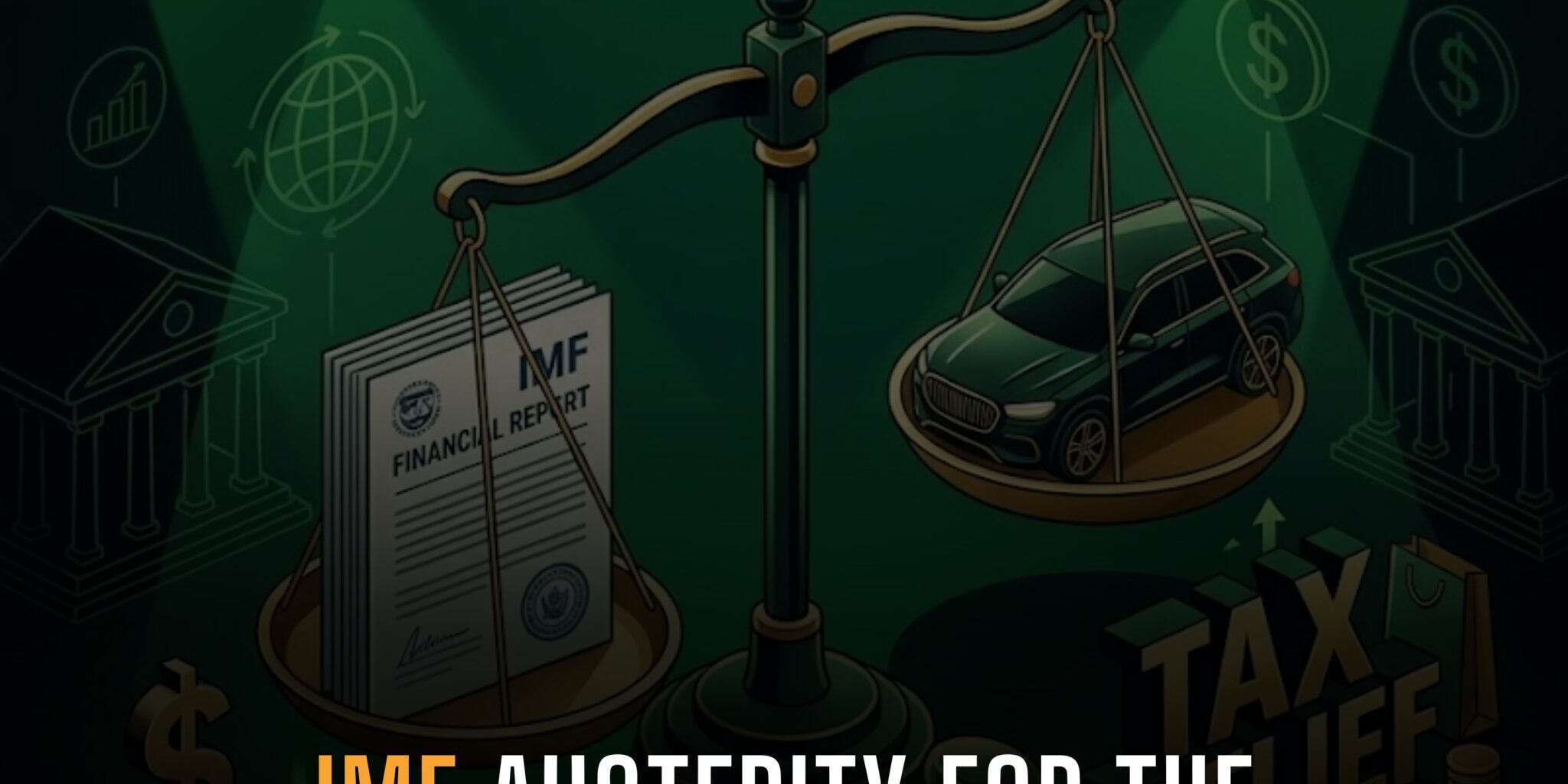
Across developing economies, macroeconomic stabilization programs under the International Monetary Fund (IMF) mandate strict fiscal discipline. In Pakistan, these adjustments primarily manifest as broad-based sales tax hikes, reduced public subsidies, and state-level austerity measures that heavily impact everyday consumers.
However, ongoing public and economic debates highlight a sharp contrast: while the general population shoulders the burden of rising living costs, the taxation structures governing luxury goods, imported high-engine vehicles, and corporate tax exemptions remain under intense scrutiny.
Aligning national trade policy with equitable tax reform is no longer optional—it is a central requirement for transparent revenue collection and sustainable growth.
The Fiscal Balancing Act: Mass Taxation vs. Wealth Levies
Economic recovery under structural adjustment programs requires closing severe revenue gaps. However, the distribution of that tax burden remains a key point of discussion:
- Broad-Based Indirect Taxes: Increases in standard General Sales Tax (GST) directly raise the cost of essential food items, utility tariffs, and everyday transportation.
- Luxury & Imported Vehicle Levies: Recent regulatory updates—such as using true MSRP valuation for imported cars and adjusting Federal Excise Duty (FED) rates—aim to prevent luxury vehicle undervaluation. Yet critics argue that loop-holes and corporate concessions still lag behind broader tax compliance enforcement.
- Targeting Subsidies vs. Removing Exemptions: The IMF continues to push for removing structural exemptions across major industries while advocating for targeted social safety nets rather than blanket price cuts.
Impact on the Automotive Sector & Corporate Economy
The intersection of IMF policy guidelines and automotive trade policy creates significant shifts for businesses and consumers:
- Uniform Tax Enforcement: Attempts to introduce lower, concessional tax rates for imported electric or hybrid vehicles have met resistance from international lenders who favor uniform sales tax policies across all vehicle tiers.
- Import Valuation Rules: Stricter Customs General Orders now prevent importers from declaring artificial low-value assessments, forcing higher duty collections on luxury SUVs and high-end sedans.
- Corporate Restructuring Needs: Shifting regulatory frameworks necessitate that business enterprises re-evaluate their supply chains, duty exposure, and legal compliance structures.
Building Equitable Tax Structures for Long-Term Growth
Achieving true economic stabilization requires moving beyond emergency tax hikes toward structural equity. This involves:
- Broadening the direct tax net to cover high-net-worth individuals and under-taxed sectors.
- Eliminating distortionary exemptions that favor narrow corporate interests.
- Maintaining clear, predictable trade policies that encourage local industrial assembly over pure consumer imports.
Strategic Business & Legal Advisory
Navigating rapidly shifting corporate tax policies, customs valuation updates, and import regulations requires proactive financial planning. Corporate enterprises, business owners, and institutional investors seeking full tax compliance, legal asset management, and corporate setup guidance can consult the advisory team at Mansory Consultants.
Targeted Digital Lead Generation
Financial advisories, corporate law firms, and tax consulting agencies aiming to establish online market authority can run targeted, performance-driven digital campaigns with Makani Marketing.